SOLICITOR
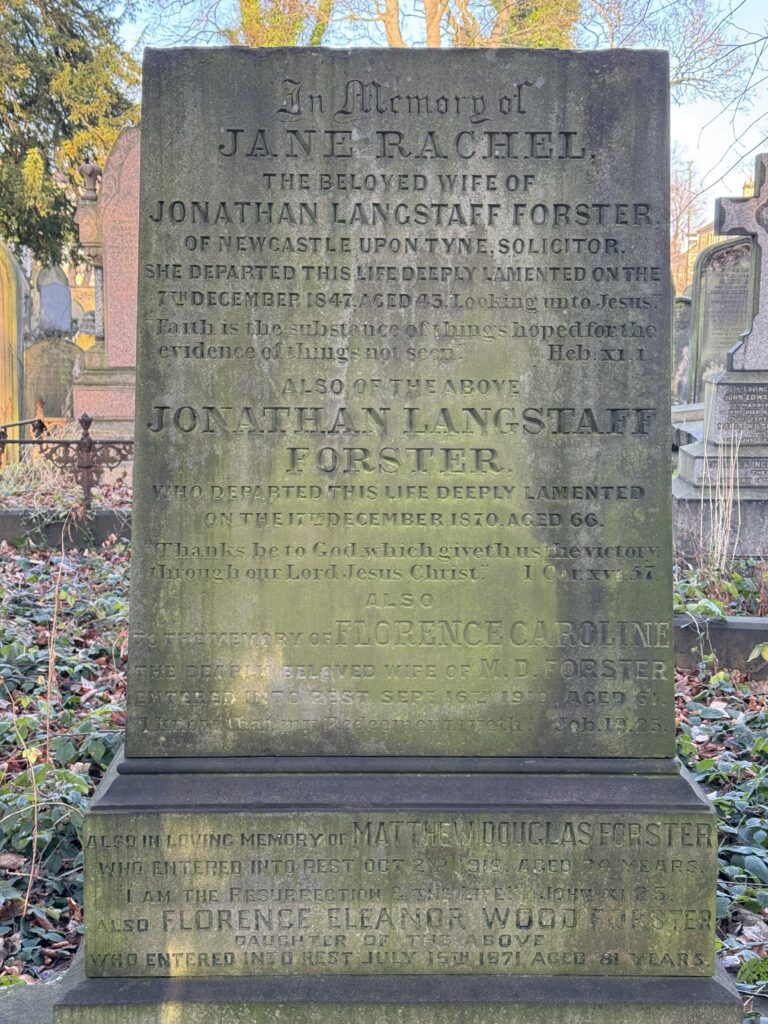
Situated in the Consecrated/West Section of Jesmond Old Cemetery.
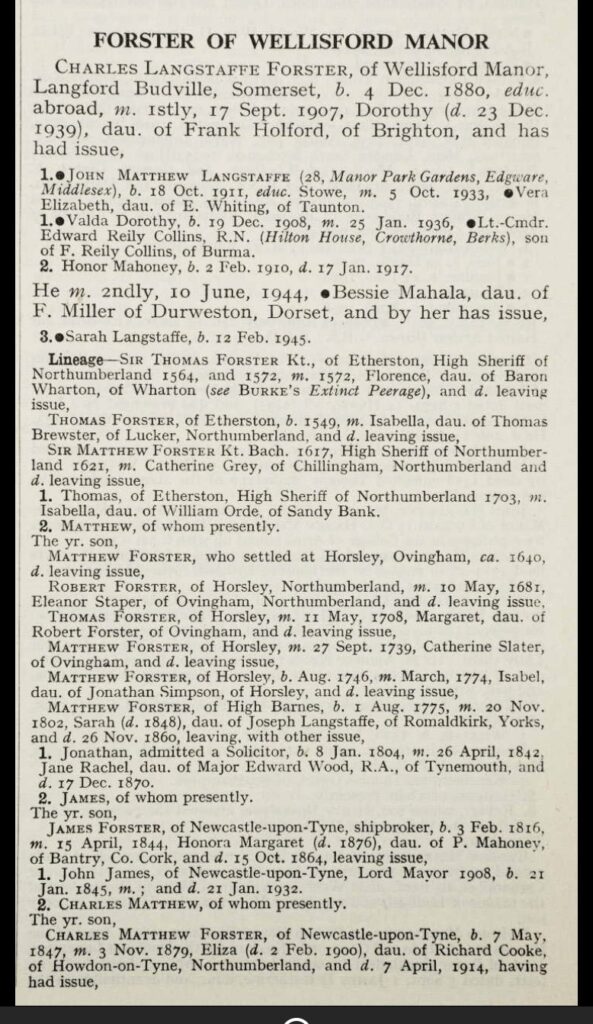
Born on the 8th January 1804, son of Matthew Forster, a solicitor, and his wife, Sarah Langstaff.
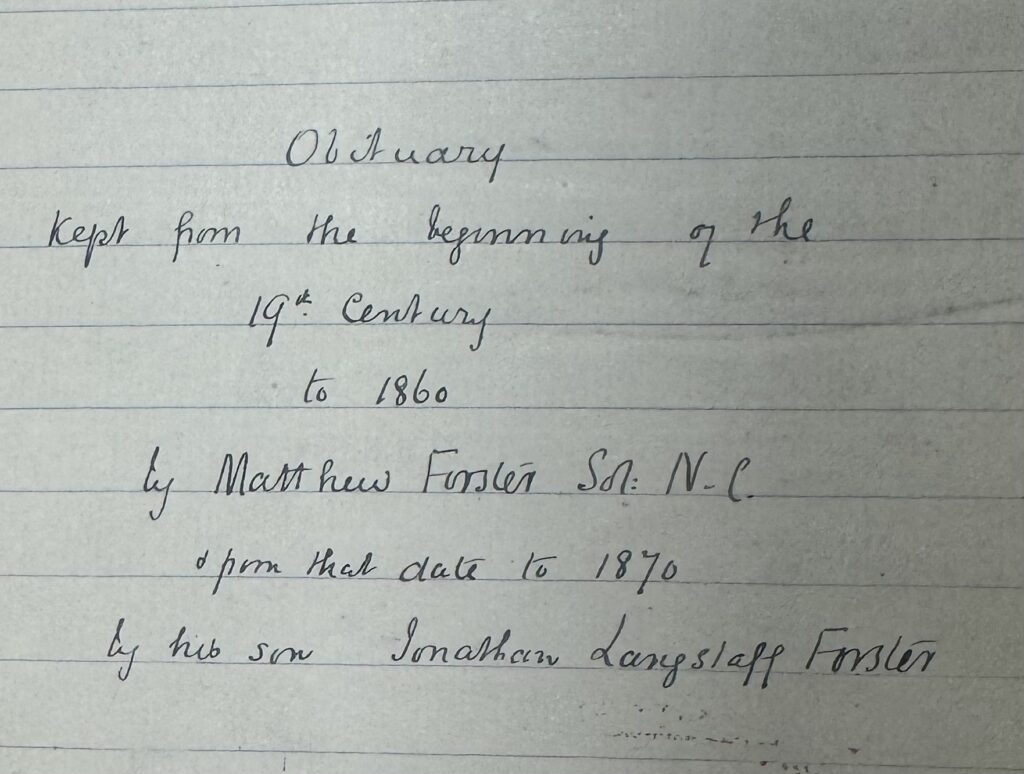
FORSTER’S OBITUARIES. Father and son were known for writing obituaries; Matthew, from the beginning of the 19th century until his death in 1860, then Jonathan until his death in 1870. They were published in local newspapers and a record kept of them along with some birth records. These were a great source of local and family history.
Burke’s landed Gentry 1952 shows his lineage can be traced back to the 1500s.
From newspaper articles and Welford’s ‘Men of Mark Twixt Tyne and Tweed’, we learn about his life and the type of person he was. Educated by John Bruce at Percy Street Academy, along with Robert Stephenson, who, later, as we know, became the great railway engineer. Articled to William Kirkley, Attorney, in Newgate Street, he then went to Messrs Fisher and Sudlow in London. Returning to Newcastle in 1827, he joined his father’s firm, becoming ‘Matthew and Jonathan Langstaff Forster’ whose office was in Library Place, Westgate Street.
When he returned to Newcastle in 1827 he joined the Newcastle and Gateshead Law Society, which had just been formed. He later became co secretary of the Newcastle and Gateshead Law Institute along with Mr Joseph Watson, father of Robert Spence Watson. In 1859 he was appointed a commissioner to superintend the preliminary examination of law students by the Incorporated Law Society. He had a love of literature, with the Literary and Philosophical Society playing a big part in his life. He spoke eight languages including Hebrew, Syriac and Greek.
Busy with his work he did not marry until he was nearly 40, when, on the 26th April 1842, he married Jane Rachel Wood, daughter of Major Wood of Berwick. He was heartbroken when she died just five and a half years later, leaving him with three sons to bring up. He devoted his life to their education. Edward Wood Forster was born in 1843 and became a surgeon. Matthew Douglas Forster, born 1845, became assistant secretary to the Bishop of Newcastle’s Church extension fund. Henry Langstaff Forster, born 1846, became a solicitor. Jane is buried in the family grave.
According to Census records he lived in Lovaine Place. This was demolished to make way for the Civic Centre. Jonathan taught in Sunday Schools, he was a member of the Church of England, Reverend Richard Clayton was his spiritual leader. When Rev Clayton died, Jonathan was one of those responsible in getting the Clayton memorial church erected. He devoted himself to helping the poor and, with his father, was co secretary of the Newcastle Auxiliary to the British and Foreign Anti Slavery Society.
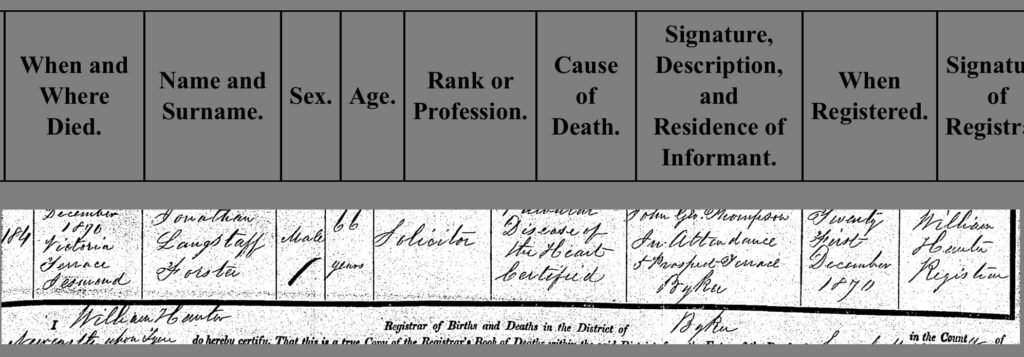
Jonathan died on the 17th December 1870 at Victoria Terrace, Jesmond. The cause of death was given as Disease of the Heart.
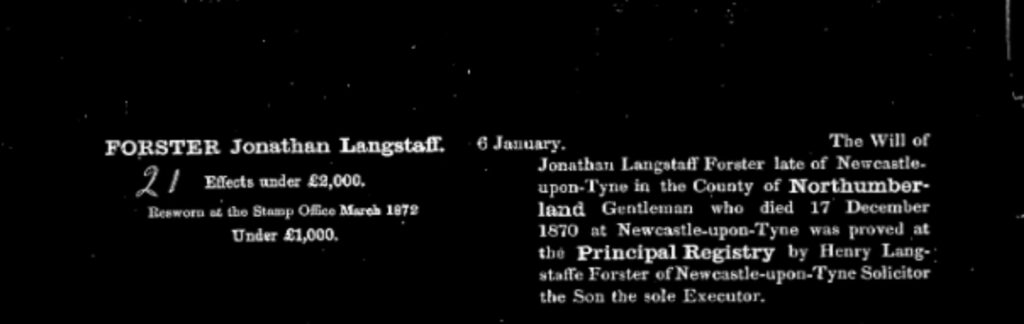
He left a Will which was proved by his son Henry Langstaff Forster, a solicitor. Effects were under £2,000.
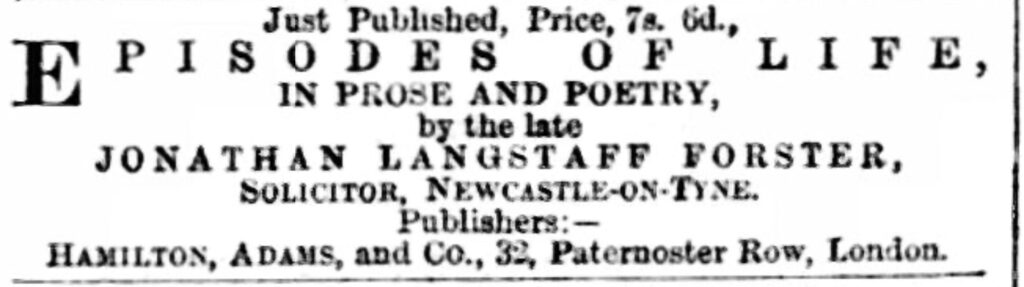
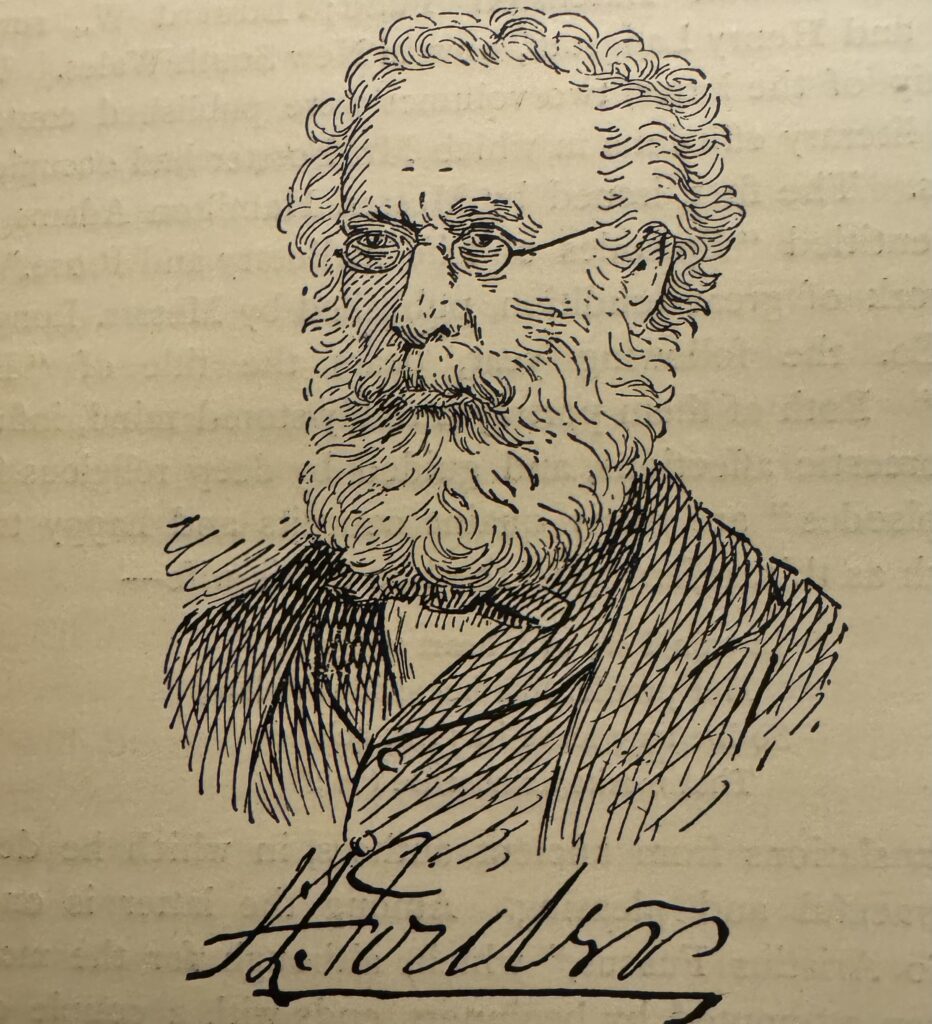
After his death, his youngest son, Henry, published two volumes of his fathers work. “Episodes of Life in Poetry and Prose” and “Biblical Psychology” The portrait of him which appeared in both titles was painted by his son, Matthew.